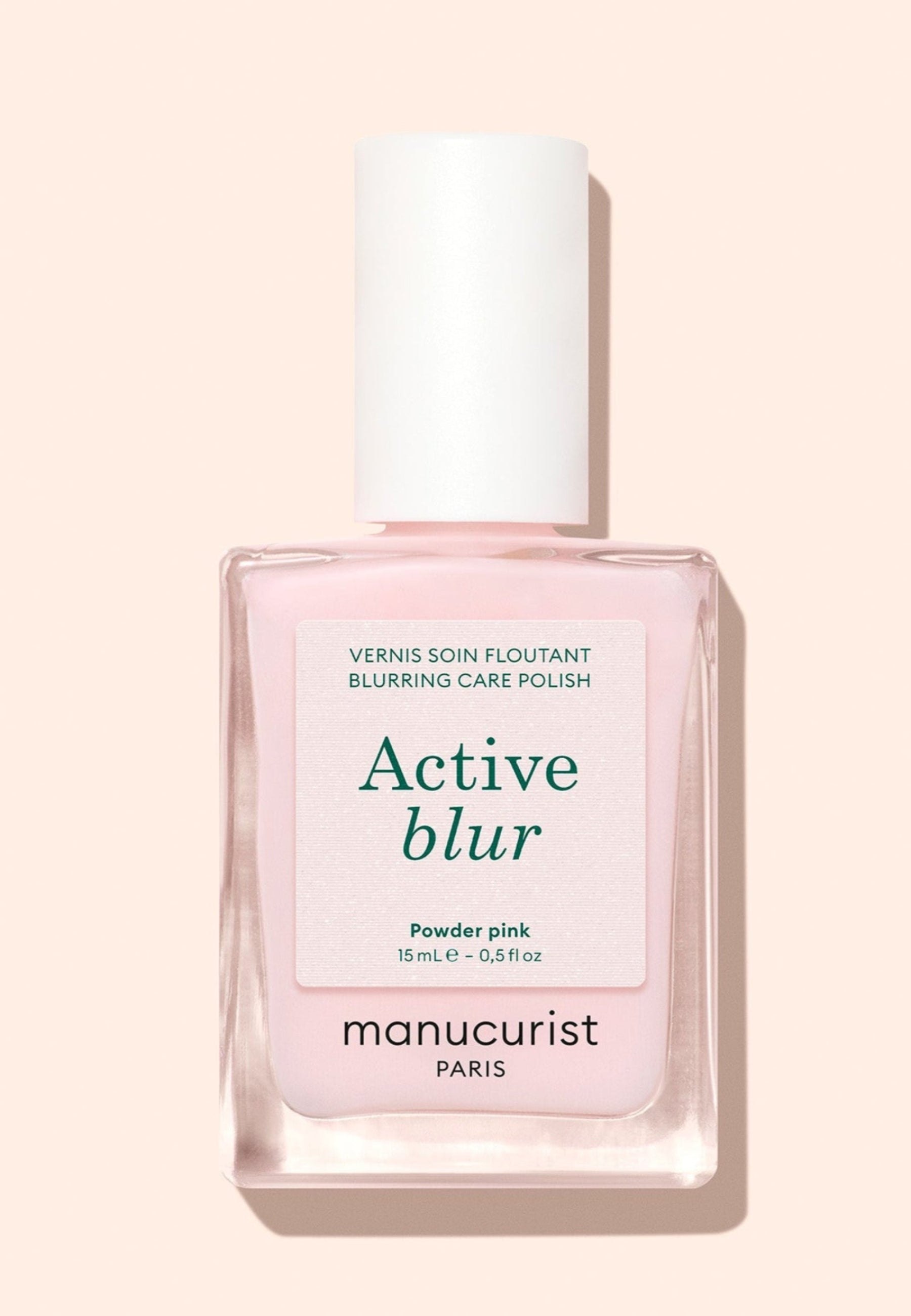


Summer 2025 was enlivened in the world of nail polish. Indeed, with the entry into force of the prohibition of OPT in cosmetic products as from 1 September in Europe, many brands of semi-permanent varnishes are forced to review their formula in order to be able to offer TPO-free varnishes. A puzzle that Manucurist has been spared, having removed the TPO and other components at risk since beautiful lure of its varnishes. To better understand the situation, you will be told what is TPO, why it is now banned and how to recognize a TPO-free varnish. Here we go!
What is the OPT and what is it for?
Definition of OPT
The TPO is the acronym for thediphenyl trimethylbenzoyl phosphine oxide, one photo-initiator commonly used in the composition of cosmetic products, especially those which must be polymerised with UV or LED such as gels and gels semi-permanent varnishes.
Role of TPO in semi-permanent varnishes and UV gels
The TPO has this particular that it allows the polymerisation when the varnish is placed under a UV or LED lamp. In other words, without TPO or equivalent, the semi-permanent varnishes cannot harden or dryThe catalysis is not performed and the varnish remains liquid. A nightmare for the addicts! But what exactly is the TPO being blamed for?

Why is TPO banned in Europe?
A component classified as CMR (reprotoxic substance)
The OPT has long been in the sight of European health authorities.
From 2014, on SCCS (Scientific Committee on Consumer Safety) has issued an opinion on the safety of its use and the potentially sensitizing effects of its use on the skin.
In 2019, the TPO is classified as CMR substances which group together chemicals that may have medium or long-term effects Carcinogens, Mutagens or Reprotoxics. We put him in the Category CMR 2, which means that it is only suspected of being toxic to human reproduction. Its use is permitted under conditions (a maximum concentration of 5%).
But in 2025New scientific studies are driving the European authorities to change things. The TPO then passes in Category CMR 1B and is considered to be proven toxic to human reproduction (Regulation No 2025/977, known as "Omnibus VII". This new status automatically triggers its prohibition in cosmetic products under the European Cosmetic Regulation (Regulation (EC) No 1223/2009).
What changes on September 1, 2025
Following the entry into force of the prohibition of OPT in the countries of the European Union, it is no longer possible to:
-
placing on the market cosmetic products containing OPT,
-
make these products available, including to professionals,
-
use these products, particularly in the context of professional services (painting, manicure, etc.)
Short-term consequence: a possible reduction of the supply of semi-permanent varnishes, products containing OPT, whether originating from European or non-EU-based brands, cannot be sold on the European market anymore.
However, such a ban always takes time to be enforced and consumers must remain vigilant buying their nail polish. To avoid bad surprises, see the list of INCI which is on the packaging and which gives the exact composition of the product.
So is this the end of semi-permanent varnish or the beginning of a new generation of TPO-free varnishes?

Is it possible to have semi-permanent varnish without TPO?
Are there alternatives to OPT?
The good news in all this is that we can actually dispense with TPO in semi-permanent varnish. At Manucurist We've never even served! The same applies to other substances classified as CMR or methacrylate monomers (HEMA and Di-HEMA-TMHDC) which has always been excluded from our formulas.
It wasn't easy and it took several years of research to find a substitute for OPT, but we ended up finding it: the TPO-L, a safer and more stable photo initiator that the TPO. The difference between the two molecules is not only in this letter L in addition. The TPO-L n í is neither classified as CMR nor considered an endocrine disrupting potential, a perfectly safe ingredient that delivers the same performance without risk.
A new generation of high-performance and safe varnishes
By choosing to develop varnishes free from any controversial molecule, without waiting for regulations in this field, Manucurist is a pioneering and innovative brand, committed to more responsible and sustainable beauty. With Green Flash™, Manucurist has launched a new generation of semi-permanent varnishes that does not no compromise, either on the health of consumers or professionals, or on the performance of varnishes.
The secret? One vegan formula and bio-based up to 84%, conforming to sanitary requirements, which not only does not damage nails but allows to strengthen them thanks to the KeraHCE+ patented technology contained in the Base Vitamin Coat Green Flash™. And this, while checking the properties expected of a semi-permanent quality varnish:
🔥 Fast drying under LED lamp
🌈 Stable and intense color
✨ A layer of solid and shiny varnish
⏱️ A long-lasting varnish for up to 12 days

TPO was so far a central ingredient in the composition of semi-permanent varnishes and its ban in Europe could have sounded the glaze of this type of varnish. But there is no need to panic: alternatives exist and have even proven their effectiveness. Green Flash™ This is the perfect illustration. The semi-permanent varnish will not disappear but reinvent itself to contribute to the development of a healthier and safer beauty. To discover this routine at home, the starter kit Green Flash™ combines the essentials of LED lamp installation.